













Global War Impact on Jewelry Industry Exports: Growth Slows as Supply Chains Face Disruption
Global War Impact on Jewelry Industry Exports: Growth Slows as Supply Chains Face Disruption
 Published by DVNJEWELRY | Mumbai, India | March 2026 Global Jewelry Export Crisis Due to War!
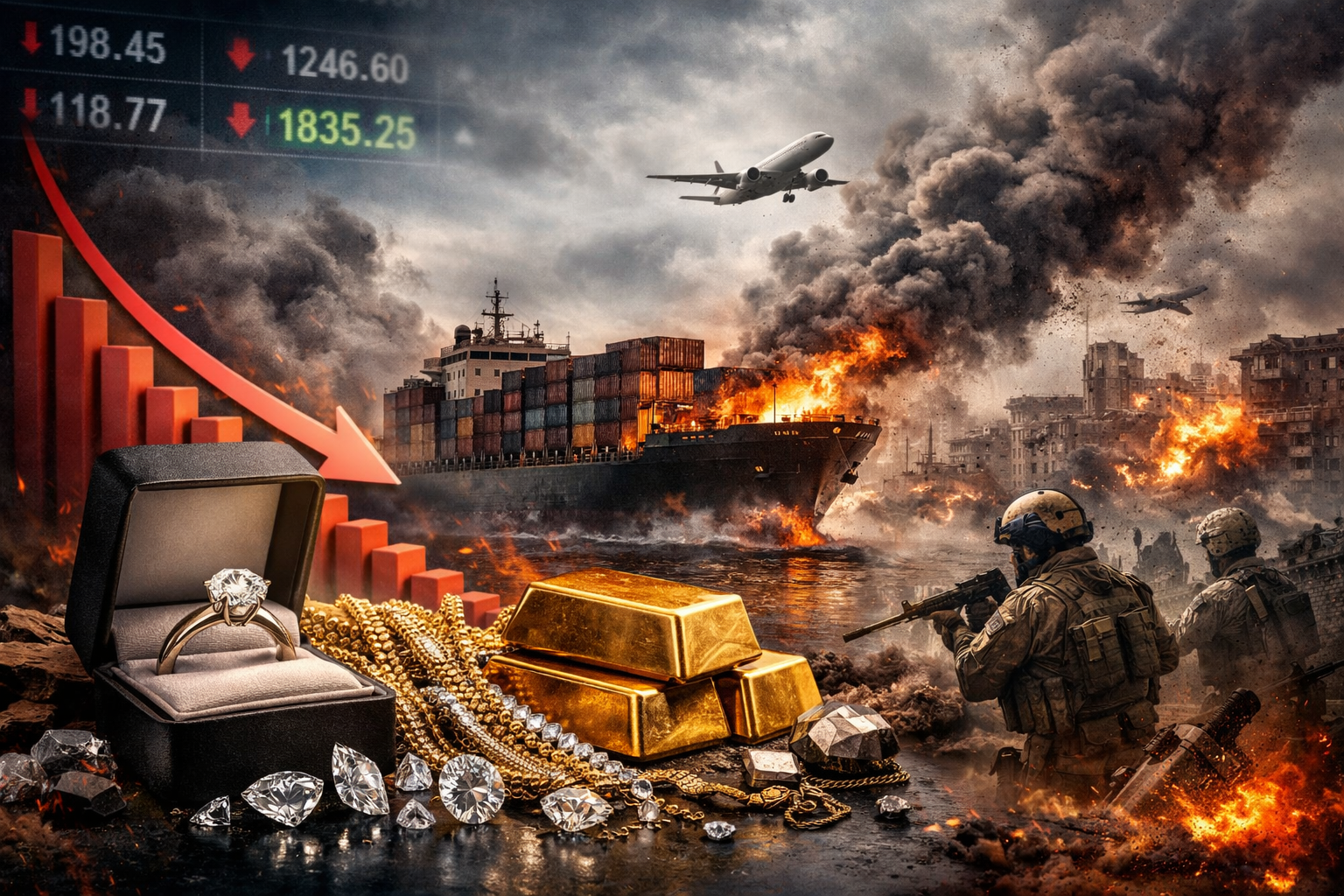
In a rapidly shifting geopolitical landscape, ongoing global conflicts are beginning to significantly impact the international jewelry export industry, creating ripple effects across supply chains, pricing structures, and long-term growth strategies.
For export-driven manufacturers, especially those operating in India—one of the world’s largest jewelry production hubs—the consequences are becoming increasingly visible.
Supply Chain Disruptions Reshape Global Jewelry Trade
The first and most immediate impact of war-related tensions is disruption in global logistics.
Restricted air routes, rising freight costs, and delays in maritime shipping have slowed the movement of precious metals, gemstones, and finished jewelry products. Exporters are now facing:
· Increased insurance premiums for high-value shipments
· Delays in international order fulfillment
· Limited access to key global markets
These disruptions directly affect delivery timelines and client commitments, especially in B2B segments.
Export Growth Declines Amid Economic Uncertainty
War-affected regions are experiencing reduced consumer spending, particularly in the luxury segment.
Jewelry, being a discretionary purchase, is among the first industries to see demand fluctuations.
Key Industry Trends:
· Decline in bulk international orders
· Increased price sensitivity among global buyers
· Slower decision-making cycles for retail brands
As a result, projected export growth for jewelry manufacturers is seeing a noticeable slowdown.
Gold Price Volatility Creates Pricing Pressure
Geopolitical instability traditionally drives gold prices upward due to its safe-haven appeal.
However, for jewelry manufacturers, this surge introduces new challenges:
· Rising raw material costs
· Difficulty in maintaining stable pricing for clients
· Margin compression across export orders
This volatility makes long-term contracts and pricing strategies increasingly complex.
Global Expansion Plans Put on Hold
Many jewelry brands and manufacturers are now revising their global strategies:
· Expansion into new markets is being delayed
· Investment in new collections is reduced
· Participation in international exhibitions is limited
This cautious approach reflects a broader industry shift toward risk management over aggressive growth.
Trust, Ethics, and Stability Become Key Differentiators
In times of uncertainty, global buyers are prioritizing manufacturers who offer:
· Transparent and ethical sourcing
· Reliable production timelines
· Sustainable manufacturing practices
Companies that demonstrate operational stability are gaining stronger trust in international markets.
DVNJEWELRY’s Resilient Approach in a Changing Global Market
Despite global challenges, DVNJEWELRY continues to operate with a strong foundation built on:
· A solar-powered, sustainable production facility
· A 100% women-empowered workforce
· Strict adherence to ethical, child-labor-free manufacturing
· Expertise in custom jewelry development under NDA
By focusing on long-term relationships and responsible production, the company continues to maintain stability in a volatile global environment.
Future Outlook: Strategic Adaptation Will Define Success
While short-term export growth may remain under pressure, the long-term outlook for the jewelry industry remains positive.
Manufacturers that adapt to changing global conditions, maintain transparency, and prioritize trust will emerge stronger in the next phase of global trade evolution.
Frequently Asked Questions:
1. How does war affect the jewelry industry?
War disrupts global supply chains, increases logistics costs, and reduces consumer demand for luxury goods like jewelry, leading to slower export growth.
2. Why do gold prices rise during war?
Gold is considered a safe-haven asset. During geopolitical instability, investors shift toward gold, increasing its demand and price.
3. How are jewelry exports impacted globally?
Jewelry exports face delays, higher shipping costs, reduced international orders, and increased pricing challenges due to raw material volatility.
4. Is the jewelry industry declining due to global conflicts?
The industry is not declining but experiencing a temporary slowdown. Long-term growth remains stable with adaptive strategies.
5. How are manufacturers adapting to war-related challenges?
Manufacturers are focusing on sustainability, ethical sourcing, stable partnerships, and cost management to navigate global uncertainty.
Leave your comment